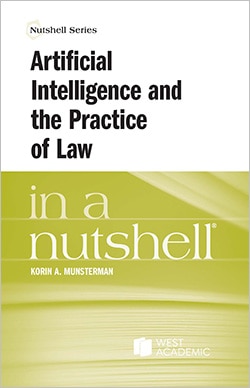
Munsterman's Artificial Intelligence and the Practice of Law in a Nutshell
Access to digital products is available immediately after completing your purchase. Please visit eproducts.westacademic.com and sign in.
eBook - Digital access to the eBook, with the ability to highlight and take notes.Description
Artificial Intelligence and the Practice of Law in a Nutshell provides a comprehensive guide for lawyers navigating the integration of artificial intelligence into legal practice. Written for both law students and practicing attorneys, the book combines scholarly analysis with practical, ready-to-use resources including proven prompts, governance frameworks, and policy models. Key topics covered include:
- the foundations and history of AI, explaining how these systems work and why understanding their evolution matters for today's practitioners;
- cautionary tales from cases like Mata v. Avianca, where attorneys faced sanctions for filing briefs with AI-generated fake citations, and similar disciplinary actions across federal courts;
- comprehensive analysis of ABA Formal Opinion 512 and state bar ethics guidance on generative AI, addressing competence, confidentiality, communication, fees, and supervisory responsibilities;
- judicial standing orders requiring disclosure or certification of AI use in court filings, and the debate over whether such requirements help or hinder responsible AI adoption;
- AI applications transforming legal practice: legal research platforms, litigation forecasting and predictive analytics, document automation and review, AI-powered client intake systems, and practice management tools;
- ethical frameworks for transparency, explainability, and accountability, including the regulatory landscape from bar associations, courts, and international frameworks like the EU AI Act;
- algorithmic bias in legal AI systems, from predictive policing tools to risk assessment algorithms, and strategies for identifying and mitigating discriminatory impacts;
- liability questions when AI systems fail: applying traditional negligence principles, determining professional standard of care, and navigating sector-specific liability regimes for AI-generated errors;
- evidentiary challenges posed by deepfakes and synthetic media in litigation, and how courts are adapting authentication requirements;
- business model disruptions including the tension between billable hours and AI efficiency gains, alternative fee arrangements, and competitive pressures driving technology adoption;
- governance polices and vendor checklists;
- the future of AI-augmented practice.